
Table of Contents
TL;DR
This summer’s policy announcements, industry gatherings, and investments made one thing clear. America’s quantum leadership will depend on its ability to build, not just innovate. From JPMorgan’s Tech Week to the White House Summit on American Quantum Innovation, the focus is shifting toward domestic manufacturing, specialized talent, and resilient supply chains. Monarch Quantum is helping build that foundation through scalable photonic hardware, workforce development, and a domestic supply chain designed specifically for quantum systems.
After several tireless months of launching Monarch Quantum, my wife and I took a much-needed holiday in Italy and Switzerland. During our time in Switzerland, we visited a museum dedicated to the history of timekeeping and the evolution of the clocks, watches, and instruments we use to measure time.
Walking past rows of intricate timepieces, I could not help but see a parallel to where quantum technology stands today.
A precision watch may be small enough to wear on your wrist, but its reliability depends on hundreds of carefully sourced, manufactured, and assembled components. Each part must meet exacting requirements. The finished product is only as dependable as the supply chain behind it.
Quantum systems face a similar challenge. Scientific breakthroughs are essential, but they are not enough. Moving quantum technology from the laboratory into practical use requires reliable components, precision manufacturing, specialized talent, and supply chains capable of supporting production at scale.
Reflecting on the trip now, the timekeeping exhibit felt like a fitting prelude to what unfolded this summer. Across government, industry, and the investment community, the message has become increasingly clear: the next chapter of quantum will be defined not only by discovery, but our ability to build.
Quantum’s next challenge is industrial
After more than 30 years in the photonics industry, I have watched initiatives come and go, each one seeking to turn an emerging technology into a source of national advantage. Quantum has long been one of the most difficult technologies to discuss publicly because it is perceived as both deeply technical and removed from everyday life.
It was not long ago that artificial intelligence felt similarly abstract. Today, AI drafts research, sharpens predictions, improves business processes, and generates the occasional viral image. Quantum is following its own path from abstraction to utility.
Since co-founding Monarch Quantum, I have spent a great deal time of speaking with government industry, academic, and financial leaders about what will it take to move quantum from promising science to fielded, trusted systems. This summer, those conversations gained a clearer national framework.
Several developments point to a growing emphasis on enabling hardware, commercialization, and scalability:
- The Center for a New American Security identified secure supply chains for quantum-enabling technologies and infrastructure as a national priority, including photonic integrated circuits, precision timing systems, specialized materials, and other foundational technologies.
- On June 22, President Trump signed Executive Order 14413, “Ushering in the Next Frontier of Quantum Innovation”, alongside a second order focused on securing the nation against cryptographic attacks. Together, these actions established ambitious objectives for quantum computing, sensing, networking, workforce development, domestic supply chains, and the transition to quantum-resistant technology.
- On July 7, the White House convened the Summit on American Quantum Innovation, bringing together senior government officials and leaders from across the U.S. quantum industry to discuss commercialization, supply-chain resilience, and workforce development.
- Private capital is also moving toward strategic industries. JPMorgan Chase’s $1.5 trillion Security and Resiliency Initiative is focused on industries critical to U.S. economic security, including advanced manufacturing, frontier technologies, and resilient supply chains.
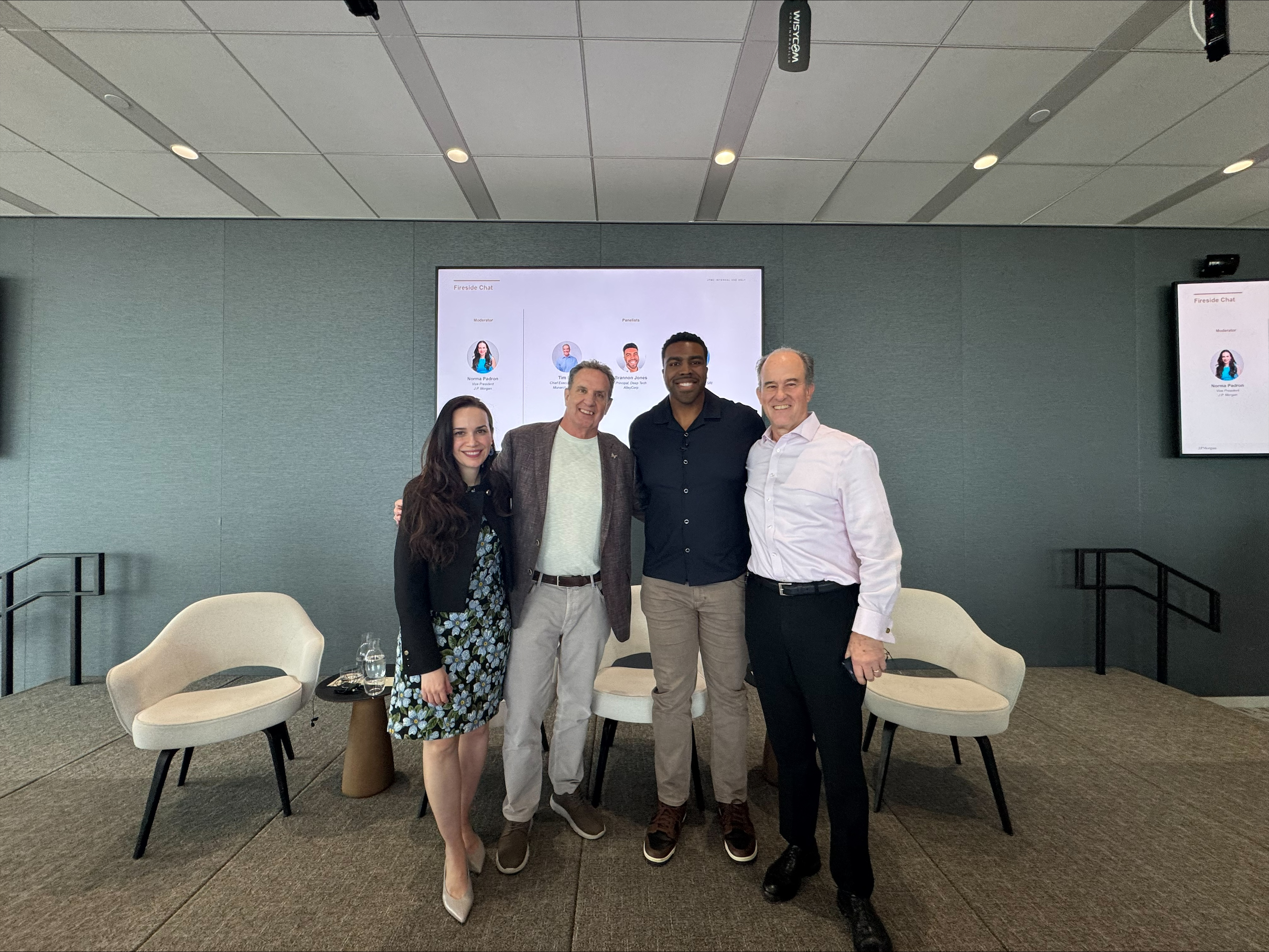
For me, these developments have not been abstract policy signals. I had the opportunity to participate in JPMorgan’s Tech Week, where I joined conversations with investors, business leaders, and technology innovators about the industries that will shape the next era of economic and national security. What stood out was the growing recognition that frontier technologies cannot scale without advanced manufacturing and resilient supply chains behind them.
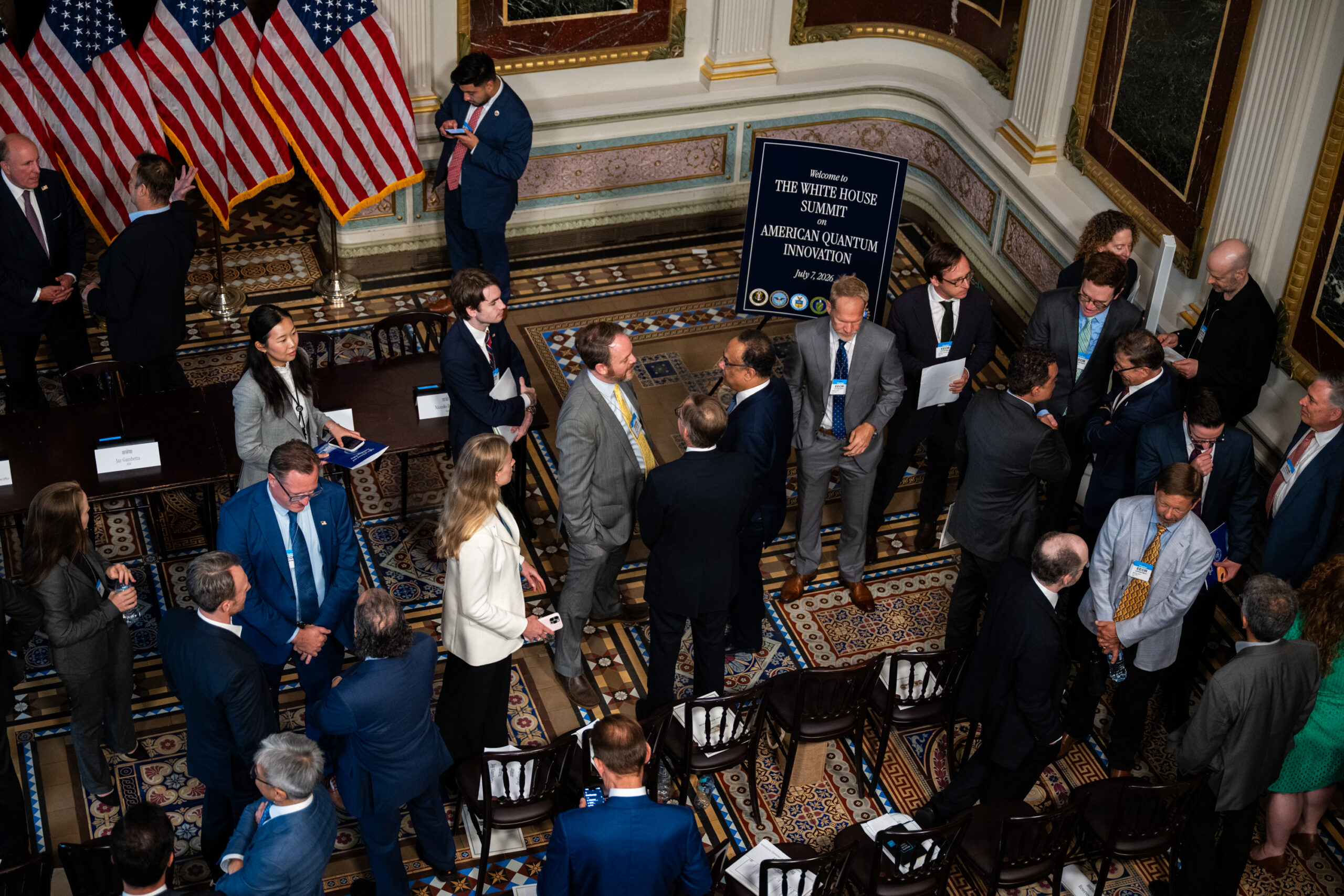
That perspective was reinforced when I was asked to attend the White House Summit on American Quantum Innovation. Receiving the invitation was both an honor and an important validation of the work Monarch Quantum has undertaken. It demonstrated that enabling technologies, supply-chain readiness, and workforce development are no longer secondary conversations. They are central to the country’s quantum strategy.
Taken together, these experiences reflect an important shift. Research remains fundamental, but the center of gravity is expanding towards deployment, manufacturing, and the industrial infrastructure required to scale.
National ambition depends on industrial capacity
What strikes me most about the executive order is not any single provision, but its overall emphasis.
Earlier national efforts focused on heavily on scientific research. The new order builds on that foundation while setting concrete objectives for a science-enabling quantum computer, next-generation quantum sensors, quantum networking, domestic supply chain, and workforce development.
This represents a broader understanding of what quantum leadership requires. Scientific excellence must be paired with the ability to source components, manufacture systems, cultivate skilled workers, and deliver technology reliably outside the laboratory.
At the White House Summit, I was honored to represent Monarch Quantum and participate in a panel focused on supply chain and workforce development. Sitting alongside government and industry leaders, I was struck by how directly the conversation reflected the challenges we discuss every day at Monarch Quantum.
How do we turn these prototypes into producible systems? Where will the specialized components come from? Who will have the practical skills to assemble, align, and test them? How do we ensure the United States is not dependent on fragile or foreign sources for technologies that will be critical to its future?
These are not distant questions. They are immediate industrial challenges, and they reinforced my conviction that Monarch Quantum’s work maps directly to the country’s emerging priorities.
Building the foundation for scalable quantum systems
Delivering the enabling hardware
Our Quantum Light Engine is designed to provide the performance, reliability, and manufacturability quantum systems need to move from the laboratory to the field.
As national priorities increasingly focus on deployment across quantum computing, sensing, and networking, Monarch Quantum is developing the integrated photonic hardware that can make system performance repeatable and production-ready at commercial scale.
Building the workforce
A national quantum industry needs people who can do more than study these systems. It needs people who can build, align, test, and manufacture them.
We are investing in hands-on talent development through our work with Central New Mexico Community College and California State University San Marcos. We are also advancing innovation through sponsored research agreements with institutions including Harvard University and the University of California, Los Angeles.
These relationships help connect scientific discovery with the practical skills and experience required to build a sustainable quantum industry.
Strengthening the domestic supply chain
The executive order’s focus on quantum-enabling components may be one of its most consequential provisions.
The United States has invested significantly at the top of the technology stack, including in the system integrators building complete quantum platforms. That investment, however, does not automatically create a resilient supply base for the specialized components those platforms require.
Monarch Quantum is investing to develop a domestic photonics supply chain built specifically for quantum markets. Our goal is to reduce dependence no fragile or or foreign sources while helping ensure that the components underpinning U.S. quantum systems can be manufactured reliably and at scale.
Like the timepieces I saw in Switzerland, a quantum system cannot achieve precision or reliability without a strong foundation of carefully engineered components.
Serving the broader ecosystem
Progress in quantum will require sustained collaboration among industry, government, academia, and the investment community. No single company, institution, or agency can build this future alone.
From the conversations at JPMorgan’s Tech Week to the discussion at the White House Summit, a consistent theme emerged that America must connect scientific leadership with industrial capacity and committed capital. Durable public-private partnerships will be essential to aligning national objectives, commercial capabilities, workforce development, and scientific advancement.
Supply chains will determine who leads
This is not the moment quantum technology suddenly transforms every industry. It is the moment the country collectively decides that moving quantum from science to deployment is a national priority worth organizing around.
We are entering a transition defined by clearer objectives, stronger industrial commitment, and an increasingly urgent timeline.
America’s quantum leadership will not be secured by a single breakthrough. It will be built through thousands of precise decisions about engineering, manufacturing, sourcing, education, investment, and collaboration. It will depend on an ecosystem of researchers, technicians, engineers, manufacturers, business leaders, investors, and public-sector partners pulling in the same direction.
A precision timepiece does more than measure time. It represents what becomes possible when craftsmanship, engineering, and a dependable supply chain work together.
Quantum’s time is coming. Our responsibility is to build the infrastructure that will allow it to arrive.